Enabling World Insight Series
Masculinity, Mental Health, and What Needs to Change
THE CHALLENGE :
What does it mean to be a man in India today? Men are still expected to be providers, protectors and pillars, while the economy shifts, families evolve and the workplace demands a kind of strength that traditional norms never prepared them for.
The result is a growing but often overlooked mental health challenge. Men account for a disproportionate share of suicide deaths in India, and yet conversations about men’s mental health barely register in mainstream discourse. Behind these numbers are men navigating financial insecurity, social isolation, restrictive expectations of masculinity and the pressure to remain emotionally invulnerable.
This is not simply a story about men struggling to meet expectations. It is also about the expectations themselves, how boys are conditioned to internalise them, how they shape men’s relationships and identities, and why the systems around them often fail to provide support.
01 What Is Masculinity?
Masculinity is not simply about gender; it is a concept, a set of values and expectations that societies construct and reconstruct over time. Ask most Indian men what it means to be a man and the words that surface most often are “responsible”, “hard-working” and “successful”. Responsible for the family. Responsible for the finances. Responsible for holding it together, no matter the cost.
A 2026 Harvard Kennedy School study, based on a survey of 1,254 Indian men aged 18-30, found that responsibility and hard work were among the most frequently associated qualities of manhood. Financial provision remains central to how many young men understand their identity, even as economic opportunities become increasingly uncertain.
The same research found that 83% of respondents agreed with the statement: “Men don’t show pain because they know the whole house rests on their shoulders.” This captures a particularly powerful contradiction: men are expected to shoulder responsibility but are often discouraged from acknowledging the emotional cost of doing so.
The concept of masculinity has evolved differently across human history and geography. In agrarian India, land and physical labour defined a man’s worth. Through industrialisation, economic output took over. Today’s knowledge economy, with its premium on collaboration, emotional intelligence and adaptability, calls for a fundamentally different kind of strength.
The challenge is that cultural expectations have not kept pace with economic and social transformation.
Importantly, masculinity is not inherently harmful. Qualities such as responsibility, resilience, courage and commitment can be positive and valuable. The problem arises when these qualities become rigid obligations: when responsibility means carrying every burden alone, resilience means never acknowledging distress, and strength means never asking for help. This restrictive set of expectations has been described as the “Man Box”: a framework that rewards independence, stoicism, dominance and emotional self-sufficiency while discouraging vulnerability, connection and care. When these expectations are rigidly enforced, they can undermine men’s mental health, relationships and social connections.
The result is a generation of men caught between two worlds: raised on old norms, working in new ones. Some are navigating this transition with remarkable openness. Many more are struggling in silence.
02 The Weight of Old Norms
Traditional masculine stereotypes, be the provider, suppress emotion, project strength, never ask for help, were often reinforced as markers of responsibility and social respectability. In today’s world, when applied rigidly, they become a hidden source of harm.
Research from the Harvard Kennedy School found that 76% of young Indian men surveyed believe it is harder for their generation to feel financially secure than it was for their parents’ generation. Yet the expectation to provide has not softened at the same pace. This gap between expectation and reality creates a pressure cooker. Men are expected to be the primary earners, decision-makers and emotional anchors. But the labour market is more competitive, employment opportunities are uncertain, and the nature of work is changing. Financial anxiety and identity anxiety arrive together, often with no socially sanctioned outlet.
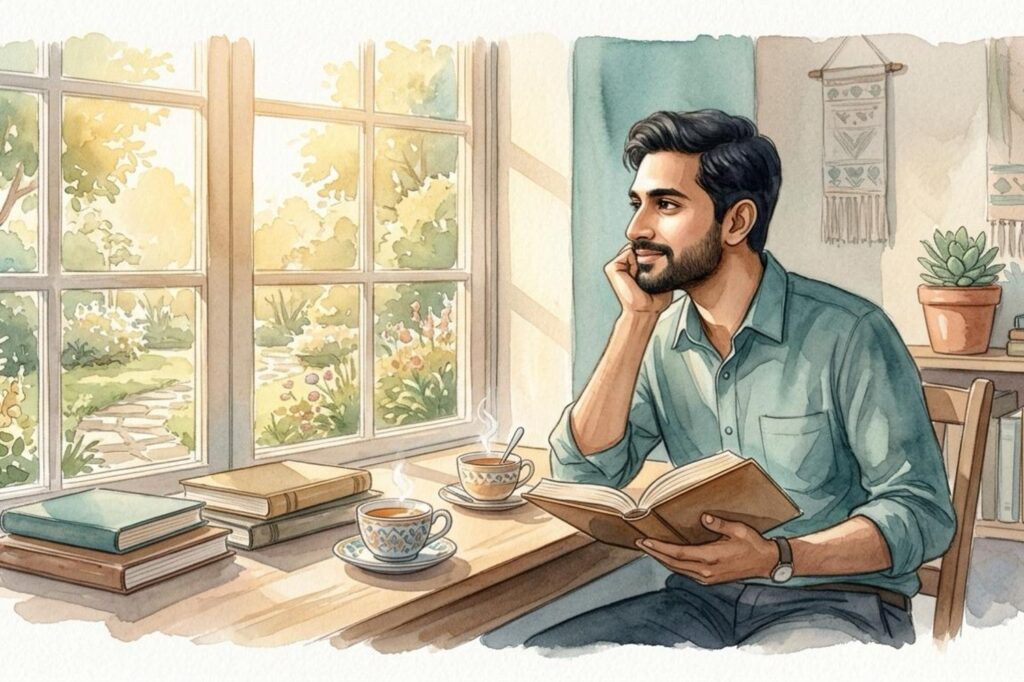
 The consequences extend beyond financial stress. A 2026 scoping review by Nasir et al., published in the International Journal of Men’s Social and Community Health, examined 35 studies from 2,001 records to map the evidence on men’s mental health in India. It identified financial instability, unemployment, indebtedness, restrictive gender roles, stigma and a lack of social support among the factors associated with poorer mental health in men.
The review also highlights how men’s mental health cannot be understood through masculinity alone. Socioeconomic disadvantage, physical health, functional limitations, family circumstances and social isolation all intersect with gender expectations to shape men’s wellbeing.
In workplaces, these norms manifest in damaging patterns: communication designed to signal authority rather than invite ideas; competitive rather than collaborative team dynamics; stigma around paternity leave or flexible working; and senior male leaders who feel they must project invincibility at all times. The same expectations can make it difficult for men to admit that they are overwhelmed, seek counselling or take time off for their mental health. The workplace can become another environment in which men feel compelled to perform strength rather than express their needs.
Women, too, absorb the cost of this culture. Studies consistently show women adapting their communication, leadership styles and professional identities to fit masculine templates, not necessarily because they choose to, but because organisational systems can reward those who conform.
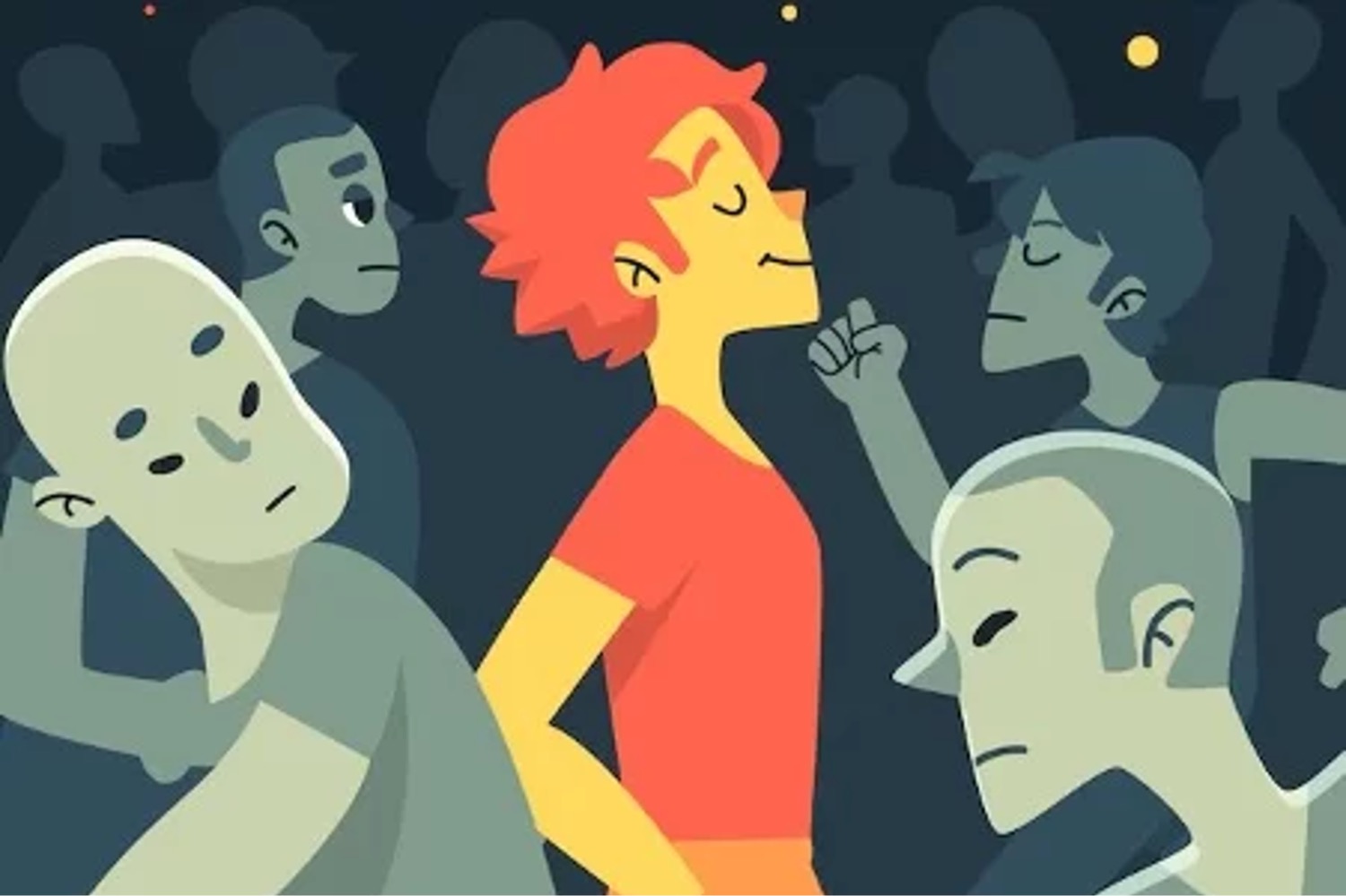
Beneath the visible performance of responsibility and strength lies something often missed: a significant experience of loneliness and disconnection. The Harvard Kennedy School research found that more than half of the young men surveyed felt that “no one really knows me”.
03 The Silent Mental Health Crisis
We live in an era of hyper-personalisation. The music we hear, the content we consume and the products we buy are tailored to individual preference. The same expectation is now arriving in the workplace. Employees do not want a standard wellbeing programme. They want an experience that reflects their actual situation, needs and stage of life.
This is both right and genuinely difficult. The core challenge is how an organisation learns what individual employees need without crossing into invasive territory, violating data privacy, or creating conditions where employees share only what they think the organisation wants
The numbers demand sustained attention. As per a 2026 study, India’s male suicide rate increased by approximately 24% between 2013 and 2023, from 14.16 to 17.53 per 100,000, while the female rate declined by approximately 6%. The steepest rises between 2019 and 2023 occurred among middle-aged men and adults aged 60 and above. India’s overall suicide rate rose by approximately 14% over the same period. These figures come from a 2026 study published in Cambridge Prisms: Global Mental Health, examining NCRB data across a decade. In 2024, 73.5% of all suicide deaths in India were male, representing over 1.25 lakh men lost in a single year.
The increase became particularly pronounced after 2017, with regional differences that matter: relative increases were greatest among men in states with lower sociodemographic development, while absolute increases were often greater in higher-development states. This is a public health and social development concern, not simply an individual or clinical one.
Other reporting points to the growing intersection between mental health and suicide. An analysis drawing on NCRB data found that suicides classified as linked to mental health increased by 44% between 2018 and 2022. In 2022, men accounted for nearly 72% of these deaths. Three in five such suicides were reported among people aged 18-45. Drug abuse and alcoholism were cited in 7.6% of suicide cases in India in 2024, up from 6.8% in 2022.
“The mental health crisis is not simply about how men cope with pressure. It is also about the social and economic conditions that create that pressure, and whether men have the relationships and support systems to navigate it.”
The 2026 scoping review by Nasir et al. found significant unmet mental health needs among Indian men alongside substantial barriers to treatment: a gap of 58.3% for bipolar affective disorder and 72.4% for generalised anxiety disorder. Perhaps most strikingly, out of 35 included studies, only one specifically focused on men’s mental health, and no intervention programmes specifically designed for Indian men were identified. While the evidence identifies the problem, there remains very limited research on what interventions work, for whom, and under what conditions.
04 Why Men Don't Seek Help
The barriers to men seeking mental health support are deeply structural. Boys are conditioned from childhood to equate help-seeking with weakness. “Man up”, “boys don’t cry”, “stay strong” – these messages accumulate across decades and become difficult to override in adulthood. This conditioning does not begin when men enter the workplace or start families. It begins much earlier, in homes, schools, playgrounds and peer groups. Boys learn which emotions are acceptable, which behaviours are rewarded and which expressions of vulnerability invite ridicule.
Boys may suppress grief, conceal anxiety, withdraw from activities they enjoy or avoid expressing themselves creatively because these behaviours are labelled as insufficiently masculine. Over time, the pressure to perform toughness can disconnect boys from their own emotions and make it harder to develop supportive relationships. In India, mental health stigma carries an additional layer. In many communities, mental illness is still associated with shame, not just for the individual but for the family. Men who acknowledge struggling may be perceived as having failed in their primary role.
The 2026 scoping review identifies restrictive gender roles, social stigma and a lack of social support as important factors influencing men’s mental health. It also highlights socioeconomic disadvantage, unemployment and financial instability. These factors reinforce one another: economic difficulties can undermine a man’s sense of identity, while social expectations can make it difficult to acknowledge the distress that follows.
 When men do reach out, the support they receive matters. Healthcare providers themselves may overlook or misinterpret men’s psychological distress because of gendered assumptions about how mental health conditions present. Improving access, then, is not simply about encouraging men to seek help. It requires healthcare systems equipped to recognise men’s needs and respond without judgement. Around half of the young men in the Harvard Kennedy School survey reported feeling down, depressed or hopeless in the preceding two weeks, yet most had not sought help of any kind. Distress and loneliness coexist with the public performance of confidence.
Clinically, male distress may sometimes be expressed through irritability, withdrawal, risk-taking or substance use rather than visible sadness. Recognising a wider range of possible signs is important so that distress is not overlooked simply because it does not match stereotypical expectations.
Key barriers keeping Indian men from seeking help:
- Inability to name or describe emotional states. “I’m fine” becomes the default.
- Stigma: mental health confused with weakness or family shame.
- Provider identity: vulnerability feels like a failure to fulfil the core male role.
- Fear of career consequences if distress becomes known at work.
- Social isolation and limited access to supportive relationships.
- Shortage of accessible, affordable and confidential care, especially outside metropolitan areas.
- Limited availability of gender-sensitive and culturally responsive mental health services.
- Social expectations from an early age that discourage boys and men from expressing emotion.
05 A New Masculinity Is Emerging
Something is shifting. And the emerging evidence suggests that the change may be more significant than we assume.
The Harvard Kennedy School research on young Indian men found a revealing gap between what men privately believe and what they think other men believe. 79% of respondents agreed that changing diapers and being involved in childcare does not make a man any less masculine. Yet, on average, they estimated that only 67% of their peers shared this view. This 12-percentage-point gap suggests that many men may underestimate how much other men also want to participate in caregiving. Similarly, 68% agreed that letting go of the pressure to be perfect and showing vulnerability could improve their relationships.
These findings point to an important phenomenon known as pluralistic ignorance: the tendency to misjudge what others believe or accept, even when many people privately share similar views. In other words, men may want to be more emotionally present, involved fathers and supportive partners, but hesitate because they assume these choices will be viewed as unmanly by others.
Culture is slowly catching up. When Roger Federer wept openly at his retirement and was celebrated for it, it signalled that emotional honesty is compatible with greatness. More broadly, changing conversations around fatherhood, caregiving, therapy and emotional wellbeing are creating opportunities to expand what society recognises as masculine strength.
What modern organisations need to cultivate in their male employees and leaders:
- Emotional intelligence and comfort with psychological safety.
- Inclusive leadership, genuinely open to perspectives across gender and background.
- Vulnerability modelled from the top, not just tolerated at the edges.
- Willingness to take parental and wellbeing leave without career-related fear.
- Active allyship, for women and for other men struggling in silence.
- Recognition of caregiving, emotional availability and relationship-building as valuable expressions of masculinity.
The opportunity is not to replace one restrictive masculine ideal with another. It is to create room for different ways of being a man, without making men feel that their identity or social worth depends on conforming to a single model.
06 The Way Forward
Men’s mental health cannot be addressed through individual counselling alone. It requires a broader shift in how boys are raised, how men are supported, and how society understands masculinity.
For Organisations
The employer’s obligation goes well beyond an EAP number on a poster. Organisations must recognise that financial pressure, workplace insecurity, caregiving expectations and the perceived need to project invulnerability all influence men’s mental wellbeing. Men should be able to seek help without worrying that disclosure will affect their performance ratings, career progression or professional credibility.
- Bring in independent counsellors and ensure confidentiality.
- Train managers to recognise signs of distress and refer employees appropriately, not attempt to diagnose them.
- Provide proactive mental health information and accessible support pathways.
- Normalise parental, caregiving and mental health leave.
- Create peer-support networks where employees can share experiences without fear of judgement.
- Review cultures that reward excessive hours, emotional suppression and the expectation that senior men must always appear invulnerable.
- Recognise caregiving and emotional availability as strengths in leadership, not distractions from professional achievement.
Programmes must move beyond generic, gender-neutral wellness frameworks that overlook the specific pressures of traditional male roles, including provider anxiety, social isolation and the fear of appearing vulnerable. They must also account for differences in age, socioeconomic background, disability, occupation and family circumstances.
For Society
The most meaningful change must begin before restrictive expectations become deeply ingrained. Families and schools play a central role in shaping how boys understand emotions, relationships, responsibility and their own identities.
- Encourage boys to name and express their emotions without judgement.
- Avoid gender-specific rules about crying, fear, affection or vulnerability.
- Give boys opportunities to participate in household chores and caregiving.
- Encourage creative interests and friendships without gendered labelling.
- Teach emotional literacy and healthy relationship skills as essential life skills, not soft add-ons.
- Create safe spaces where boys can discuss peer pressure, anxiety, body image and family expectations.
- Develop community programmes that engage fathers, male mentors and peer groups in modelling positive expressions of masculinity.
The government’s Tele-MANAS initiative, which crossed 200,000 calls in its first nine months, is a step in the right direction. But awareness, destigmatisation and access must all scale together.
For Colleagues and Leaders
Men cannot dismantle these patterns alone. Women in leadership roles have a parallel opportunity to help normalise male vulnerability, encourage colleagues to take parental and mental health leave, and create teams where men can be uncertain and admit difficulty without penalty. Leaders, colleagues and families can challenge pluralistic ignorance by making alternative expressions of masculinity more visible and socially accepted. At the same time, the responsibility for transforming restrictive masculinity must not be placed on women alone. Men in positions of influence must actively challenge the expectations that restrict other men and reinforce unequal gender roles.
The conversation about men’s wellbeing is not in competition with women’s rights or gender equality. It is part of the same project: a society where no one is crushed by the role they were born into. Gender equality requires changing the systems and expectations that constrain everyone, while recognising that these constraints do not affect everyone equally. A healthier understanding of masculinity is not one in which men are expected to be less responsible, less resilient or less committed. It is one in which responsibility can coexist with vulnerability, strength with compassion, and ambition with care.
The evidence in this article points in one direction. The crisis is real, the barriers are structural, and the desire for change among men themselves is more widespread than the silence suggests. The gap is not in intention. It is in permission, in systems, and in the everyday signals that tell men whether it is safe to be honest. Close that gap, in a team meeting, in a school, in a home, in a policy, and the number of men carrying this alone begins to fall.
Key Takeaways
- 83% of young Indian men feel they cannot show pain. That is not a personal failing. It is a system design problem, and it is employers, families and schools that need to change.
- The male suicide rate in India rose 24% between 2013 and 2023. Suicide prevention must be recognised as a gender-responsive public health priority, not an individual crisis.
- Men are not unwilling to seek help. They are untrained to. Help-seeking was never modelled for them. The fix is normalisation, not persuasion.
- Loneliness is hidden inside performance. 58% of young Indian men feel nobody really knows them. Organisations should ask not just “is performance on track?” but “is this person connected?”
- The shift is already happening. Most men privately want to be more involved, more emotionally present and less isolated. The gap is between private belief and public permission, and leaders can close it.
- Start early. Emotional literacy in boys is not a soft skill. It is a public health intervention.
- Men’s wellbeing and gender equality are the same project. Both are about releasing people from the rigid roles they were born into.
The insights and perspectives in this article are enriched by the generous contributions of experts who brought both professional wisdom and deeply personal experience to panel discussions on the topic hosted by Enabling World. Access the full conversation on YouTube and HRBuzzz, our Spotify channel.
Enabling World experts will be happy to support you with any requirement on Diversity and Wellbeing Initiatives, including employee workshops, manager sensitisation, and keynote speaker sessions. Click here for more details
Also check our related Training Programmes :

 The consequences extend beyond financial stress. A 2026 scoping review by Nasir et al., published in the International Journal of Men’s Social and Community Health, examined 35 studies from 2,001 records to map the evidence on men’s mental health in India. It identified financial instability, unemployment, indebtedness, restrictive gender roles, stigma and a lack of social support among the factors associated with poorer mental health in men.
 When men do reach out, the support they receive matters. Healthcare providers themselves may overlook or misinterpret men’s psychological distress because of gendered assumptions about how mental health conditions present. Improving access, then, is not simply about encouraging men to seek help. It requires healthcare systems equipped to recognise men’s needs and respond without judgement. Around half of the young men in the Harvard Kennedy School survey reported feeling down, depressed or hopeless in the preceding two weeks, yet most had not sought help of any kind. Distress and loneliness coexist with the public performance of confidence.
 The conversation about men’s wellbeing is not in competition with women’s rights or gender equality. It is part of the same project: a society where no one is crushed by the role they were born into. Gender equality requires changing the systems and expectations that constrain everyone, while recognising that these constraints do not affect everyone equally. A healthier understanding of masculinity is not one in which men are expected to be less responsible, less resilient or less committed. It is one in which responsibility can coexist with vulnerability, strength with compassion, and ambition with care.